Diamond Search
The 4 C's
The four c's is the diamond industry's 4 most crucual grading criteria for determing a diamond's quality and value.
Carat Weight
The carat is the unit of weight for diamonds. Originally the carat was the weight of the carob seed, with which ancient lapidaries balanced their scales. In this century the carat was standardized on the metric system as .2 gram. The carat is divided into 100 points. A 1.00 carat diamond is a "100 pointer," a .50 carat diamond is a "50 pointer," and a .05 carat diamond is a "5 pointer."
Color
The color of a diamond is important. The closer it is to being absolutely colorless, the more valuable it will be. The GIA grading system assigns letters to various diamond colors. The scale begins with D (colorless) and continues to Z (very poor in color). There are also diamonds called "fancy diamonds," which are valued for their color. Diamonds can be found in many fancy colors which include blue, red and yellow. Most Kranich's diamonds fall into the colorless or near colorless range.
Clarity
Most diamonds have natural characteristics within the stone and these are known as natural inclusions. They may be minute crystals of minerals, cracks, feathers, or small whiter or black spots. Inclusions affect the clarity of the diamond to the degree that they interfere with the passage of light through the diamond. An internally flawless diamond is one in which no inclusions are visible to a trained eye under 10 power magnification and normal lighting conditions. Internally flawless diamonds are most rare and the vast majority of the world's most beautiful diamonds are not flawless. Inclusions make each diamond unique, like a fingerprint.
Cut
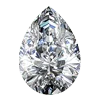
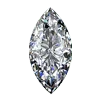
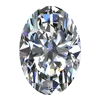
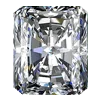
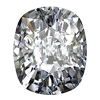
Diamonds and other Gems are cut and shaped in several different ways to emphasize their qualities, which include color, luster, and fire. A gem cutter will pick a cut based on the special properties of a particular gem. For instance, the multiple symmetrical facets of the brilliant cut enhance the sparkle of a diamond. The most popular cuts for a diamond engagement ring are Round, Princess, Marquise, Emerald, Radiant, Pear, Oval, Heart, Asscher and Cushion Shape.
Diamonds
A diamond is perhaps the oldest thing that you will ever own: a piece of carbon transformed under intense heat and pressure over a billion years ago deep within the earth and pushed violently to the earth's surface in a powerful volcanic explosion.
Diamonds have captivated us for more than three thousand years. In Ancient India, diamonds were considered objects of great power and beauty. A diamond could even transfer its strength to a warrior who wore it into battle. Other cultures held similar beliefs. The word "diamond" comes from the Greek "adamas," which means unconquerable (and is also the root of our word "adamant"). Some ancient people even believed in the diamond's ability to uncover evil or hidden poison and to expose guilt by displaying slight variations in color.
Early diamonds were kept uncut or polished. But early shamans recognized the brilliant quality that resided beneath the dull surface and many likened this quality to the perfect soul of man, hidden within an imperfect façade. Others described these gems as the teardrops of God.
Diamonds made their way to Europe along the trade routes, many of which passed through the magical port city of Venice. It is here that we find the earliest known evidence of cut stones, but these cut stones were worn only by the nobility up until a few hundred years ago. A watercolor from 1616 shows the future emperor of India, Shah Jahan, showing off a distinctive diamond turban clip. The Hylle Jewel and the Imperial Orb of Emperor Matthias of Austria are other early examples of the budding diamond trade. Before long, beautiful diamonds began to be used in innumerable ways, such as on fine diadems, crowns, necklaces, rings, brooches, and gospel covers and even on religious statuary and sculptures. The world had fallen in love with the diamond.
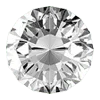
Over the years, through advancement in technology and changes in aesthetic sensibilities, new styles of diamonds have come into vogue. Now the most popular diamond cut in the United States is the Round cut—and perhaps for good reason. The round cut is arguably the most perfect proportionally, which makes it the most beautiful optically. It also has the highest level of light refraction making it the shiniest diamond cut.
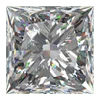
The princess cut was created in the 1960s, making it a very modern style which has grown in popularity in recent years. The top of the diamond is square, while the profile resembles an inverted pyramid. The princess cut is worn by many celebrities, including Lara Spencer, Penny Lancaster, and Star Jones.
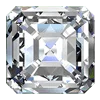
The Asscher cut is much rarer than the round cut. Most of the early examples were designed for royalty, thereby giving this cut a vintage quality that many appreciate. It has Old World charm and harkens to the Art Deco period. An antique Asscher is quite difficult to find; in fact, an enthusiast would have to scour antique shops to locate one. While the round cut makes your eye scan the surface of the radiant stone, enjoying its brilliance, the Asscher cut draws your eye into the heart of the diamond, which is why many feel the Asscher has an attractive depth other cuts may not so much embody.
The diamond's story is captivating and ever evolving. Today you can find diamonds from the classical and ever-loved diamond ring, to encrusted cell phone covers, dollar-sign bling, to fashion-rocking diamond-decorated swimsuits. Diamonds have found very important practical purposes in stonemasons' saws, surgeons' tools, dentists' drills, polishers for car engines, and heat conductors in copper wires. It is safe to say that the diamond's place in modern society is both secure and changing, enabling great technological advancements, bringing beauty and happiness to important occasions, and of course, symbolizing enduring love.